The thought of giving an actual rose to my wife did come across but I made sure it never gets manifested. I wanted to do something more than that. Something which involves pain and exertion. Perhaps, that gives more meaning to it. I had something up my sleeve. But I was mindful of the fact that plucking this rose will not be an easy task. My path will be full of tribulations, as it should. From fancy equipment to weather conditions, none was on my side. I took this path willingly, faced many technical issues and after fixing my equatorial mount, I had to face the wrath of nature. Sky was covered with clouds and after they cleared out, frequent gusts of wind kept knocking off my auto-guiding system. Nature was done with me. But then came mankind’s turn. The sky was full of smoke (pollution) with low visibility and after it cleared out, the sky was again bombarded by the strobe lights.
Murphy’s law is no joke.
But know this, when I was done collecting the photons from our galaxy’s garden, I was literally blown away. I am not exaggerating this. I felt a sense of fulfilment when I processed the data. I was finally able to bring down that cosmic rose.
Rosette Nebula
Rosette Nebula is a huge emission nebula situated in the constellation Monoceros at a distance of around 5,000 light years away from Earth. It is an active HII (ionized hydrogen) region, resembling the shape of a rose. This object is a huge cloud of dust and gas, where the stars are born. This amount of dust and gas is enough to make thousands of stars. Such a beautiful winter target this is!
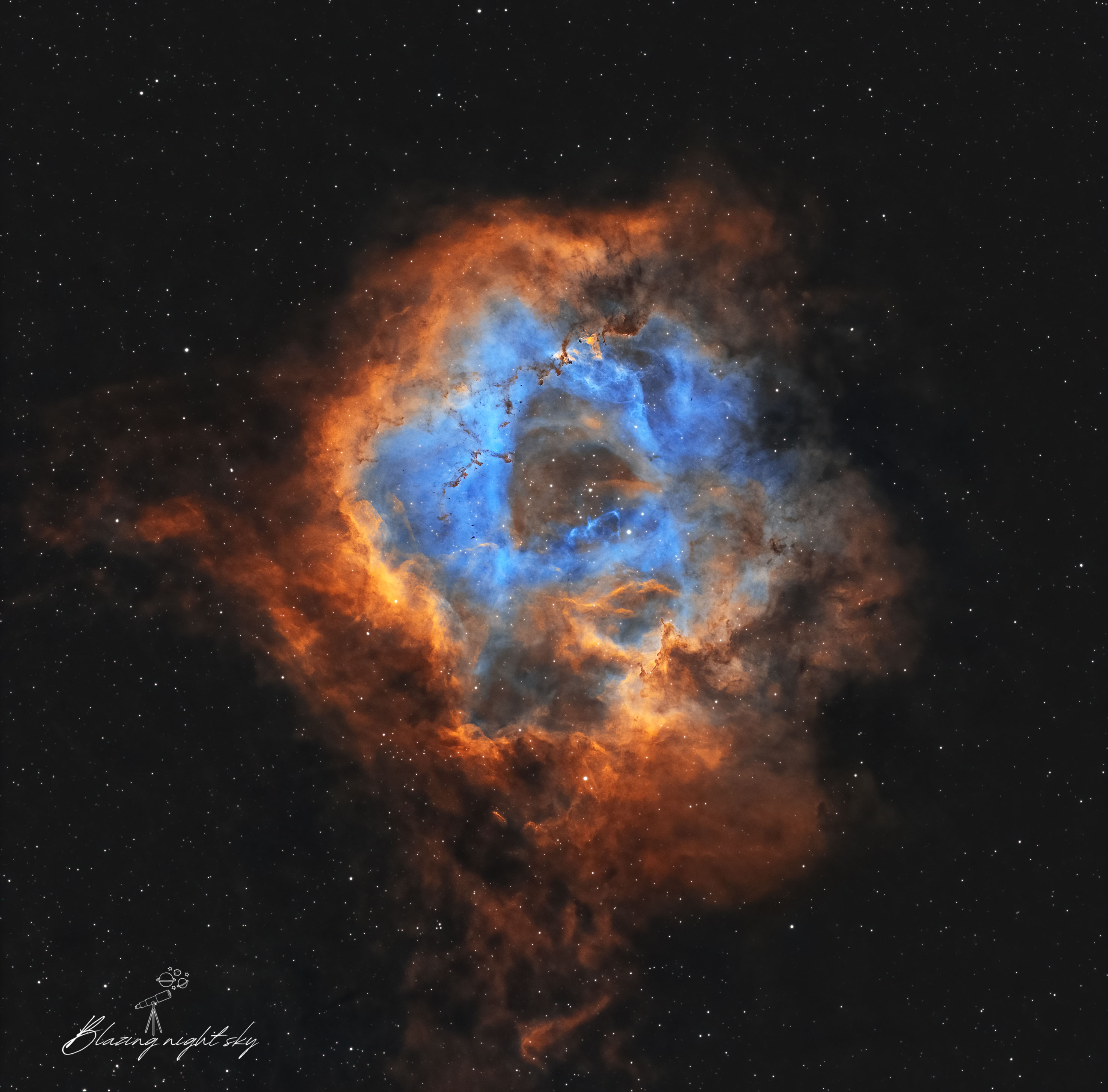
What’s exciting about astrophotography is that whichever object you capture or even look at in the sky, you are staring into the past. In the above image, the light you are looking at is around 5000 years old, meaning thereby, around that time on earth, Mahābhārata war had ended and Kali yuga (dark age) had just begun. I don’t need a time machine when I can always look back in time in all my sessions. It’s a gift from the mighty Time and you can experience it too with just basic equipment like a star tracker and a light pollution filter for your DSLR.
I captured this from heavy light polluted area. I used a monochrome camera with narrowband filters that isolate three specific wavelengths of light viz. Hydrogen, Oxygen and Sulphur.
Details:
Telescope: William Optics Redcat 51
Camera: ZWO ASI533MM PRO
Mount: Ioptron CEM26
Optolong filters SHO (7nm)
Integration time: 18 hours
Light Pollution Scale: Bortle 9
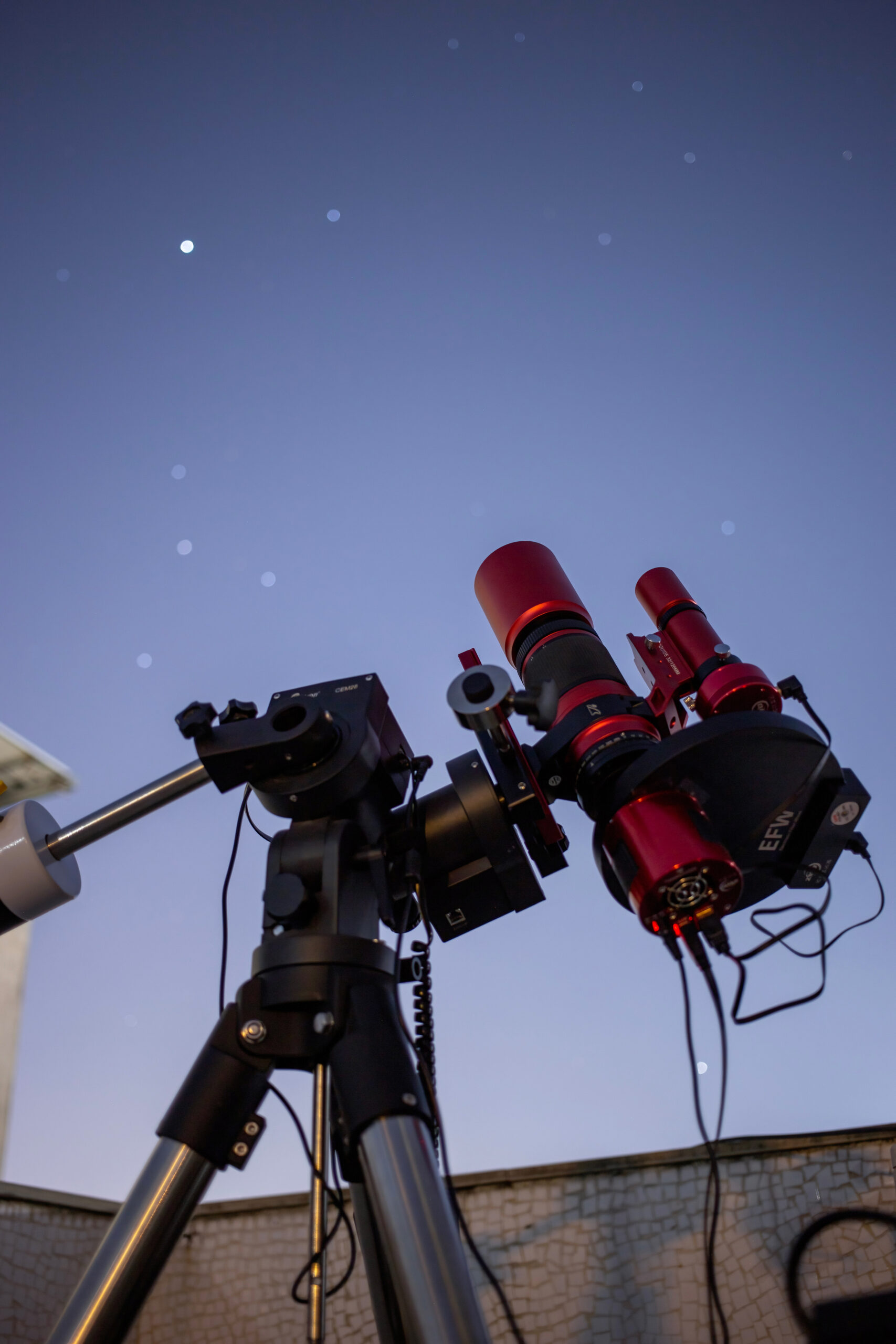
Canis Major constellation can be seen in the background, in the image above. I shot this in between the session, typically, just to feature Astrid (my setup).
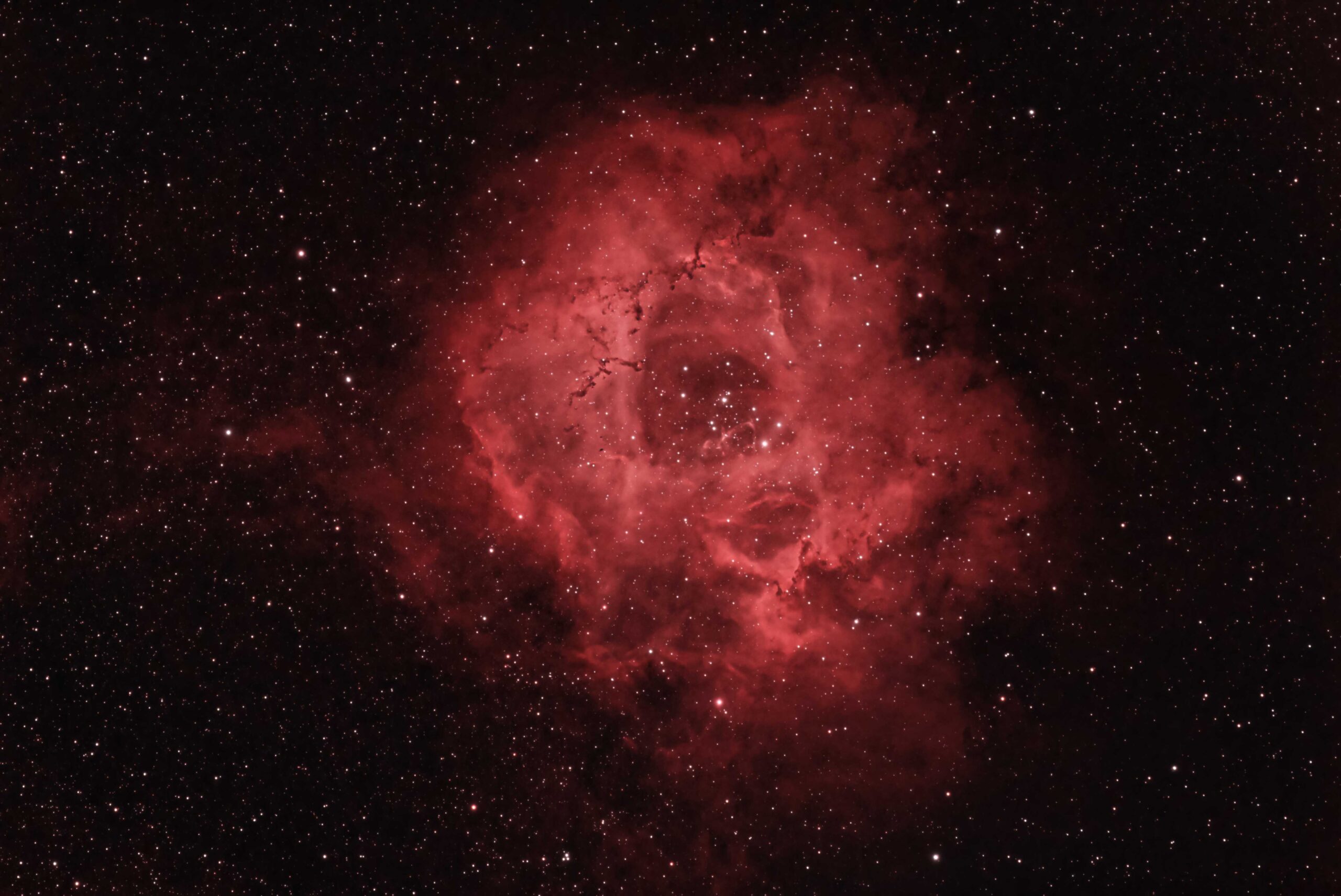
This is the first image I shot of Rosette Nebula in January, 2022, just 2 weeks before my wedding. It was my plan all along to dedicate this image to my wife. I am not against the idea of giving an earthly rose. Pure heart and good intentions matter the most. But I wanted to give something priceless, eternal and which also takes a toll on me. What better option in the market than the cosmos itself, huh? This cosmic rose demands perseverance, patience, dedication and a toll on your health too. It isn’t meant to be an easy task. If you want to give something material, then it has to have a message that promotes the idea of everlasting relations. This rose is close to eternity for a human and it certainly does not wither in a day. This is why I chose to give her this rose.
Details:
Telescope: William Optics Redcat 51
Camera: ZWO ASI183MC PRO
Mount: Ioptron CEM26
Optolong L-enhance filter
Integration time: 5 hours
Light Pollution Scale: Bortle 9
You’d probably not believe me if I say that the telescope I used to produce both the images, has only 250mm focal length, which is equivalent to the kit lens that usually comes with the DSLRs. I have a pretty wide-field setup for the deep sky objects, but at the same time the sensor size of my camera, which is only 1-inch, is quite forgiving in terms of field of view and perfect for the wide setup. The fact that 250mm focal length is enough to get decent details of nebula, is because these nebulae are huge in size and they appear even larger than full moon.
Sometimes I do fear that sooner than later I may suffer from insomnia, because whenever I am imaging on the roof, I cannot leave my setup unattended for long because of the monkeys that love to sleep around our place. Therefore, I have decided to limit my sessions by capturing only one target in a month. Let’s see if my desires are strong enough to break this plan. Lack of sleep, technical issues, weather issues, smoky skies and light pollution. These are the common issues faced by the astrophotographers all around the world most of the time. So many battles to be fought to get one image!
I’ve made peace with it. It’s a test. Not meant to be an easy one. After all, you are capturing our Creator’s masterpiece. It’s worth all the aches and tears. Clear skies to all!