Obeisance to the higher realms.
It all started in the year 2017. I was casually scrolling the amazon app for deals, when I stumbled upon Celestron 130eq astromaster reflector telescope. Universe was always an intriguing chapter in the science textbook back in the school days. Even after school, I used to keep track on the astronomy news and photos captured by the Hubble telescope. But, the thought of buying a telescope and start imaging somehow never occurred to me then. I did some research on it and bought the telescope, initially, only for visual astronomy. Here follows filmy but a true story.
After 1-2 months of watching lunar craters and learning the basics, one night I saw a bright star in the East. At first, I did not know what it was. I had manually slewed the scope and tried to center the star in my eyepiece, which roughly took 10 minutes. The moment it was centered and focused, I could literally see the bands on the Jupiter along with its 4 moons. A perfect visual!! At that moment, I did not have an app on the phone which could have shown me what it was beforehand, and I am so glad I had not downloaded it. This element of surprise is what I cherish the most about this experience and it’s forever etched in my memory. That was the first time I had seen Jupiter. As far as i remember, the eyepiece I had used was 15mm or 20mm, giving a brilliant wide view of the planet with its moons.
After couple of nights, I had downloaded the app SkyPortal and it helped me locate Saturn. It took even more time to center the planet in the eyepiece since the mount was a manual one. The very sight of these two giants was worth the pain of slewing the scope on manual equatorial mount. I had many failed attempts at capturing the planets with a DSLR camera since the objects could not be centered. That’s when I decided to go for a new telescope with a longer focal length (Celestron 127SLT Maksutov) with a computerised mount and a planetary camera, by exhausting most of my savings.
Below are some of my best planetary captures till date using a Celestron 127SLT Maksutov (5″) coupled with ZWO
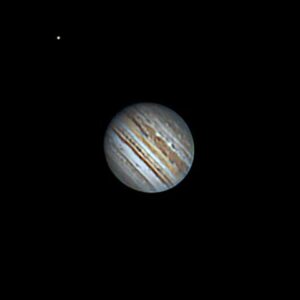
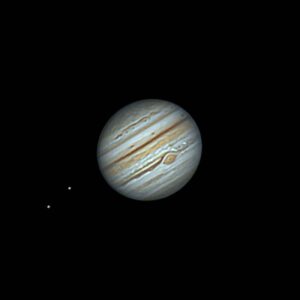
Just how a Guru protects his disciples, the same way Jupiter also watches over Earth and protects her by deflecting comets and asteroids through its gravitational power. Image (1) features one moon viz. Europa with Jupiter, and Image (2) features the iconic GRS (Great Red Spot). I was fortunate to get a clear view of the Great Red Spot on Jupiter, which is a giant storm. The bands we see on the planet are in fact series of clouds, as the planet is perpetually engulfed with storm. In the same image, there are two moons of Jupiter viz., io and europa (from left to right).
Let’s fly a bit further to the crown jewel of our cosmic family.
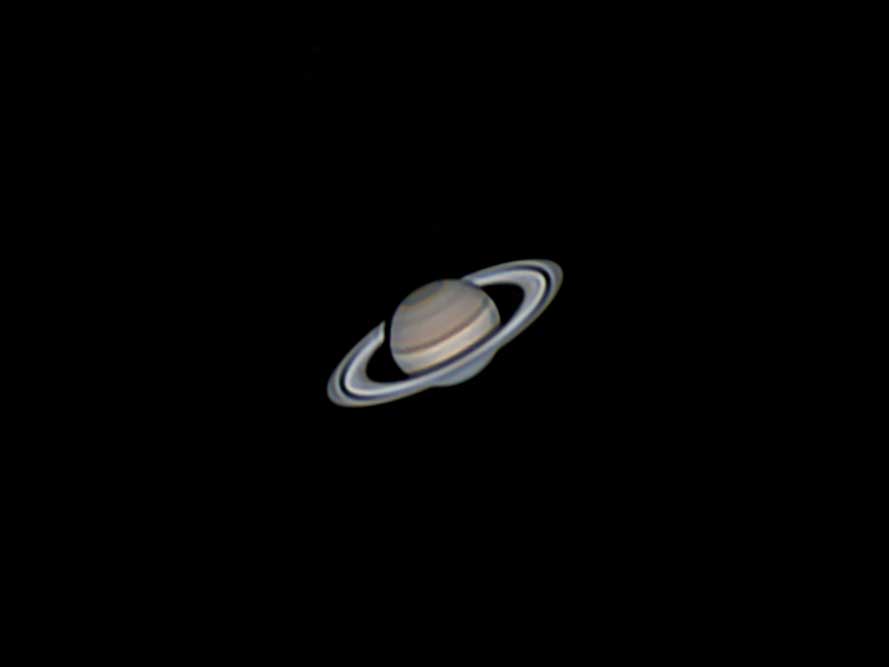
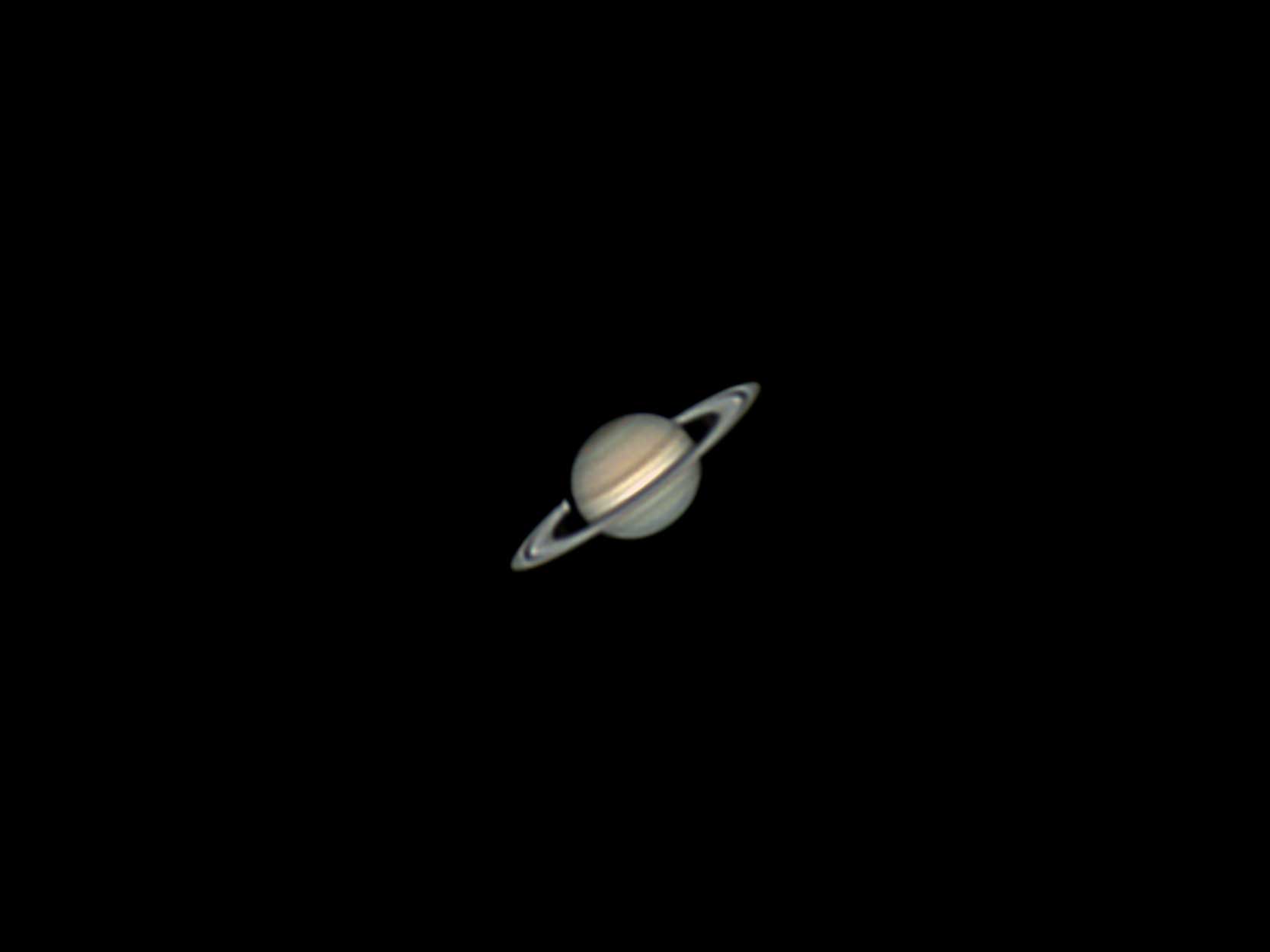
It only took a ring consisting of icy particles, rocks and dust, to make this planet look so majestic. I am forever grateful for this view. After all these years, I still wouldn’t miss a chance for visual astronomy. It’s a lifetime experience. When we look farther out into space, we actually look farther back in time. Did you know, Saturn is so far away that it takes roughly 80 minutes for the light to travel from Saturn to our eyes? That’s how massive our solar system is!
Below is the image that required more efforts than usual to bring out the faint moons of Saturn during post processing. I had captured 2 separate videos i.e., one with proper exposure for the planet and other one with longer exposure for the moons because they are too faint. I had later on combined the 2 final outputs and blended them as layers in photoshop. It was a tedious process, but I can feel the satisfaction even today. I had captured this in 2021.
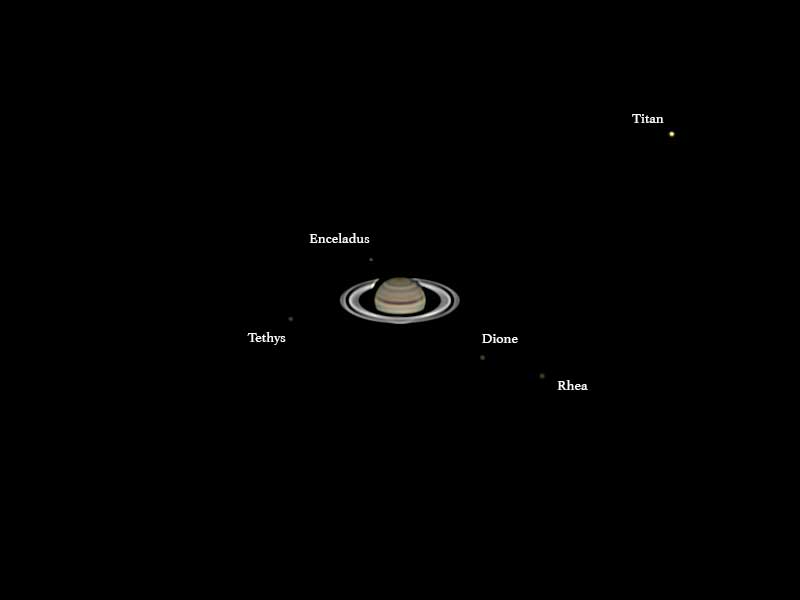
The Omen
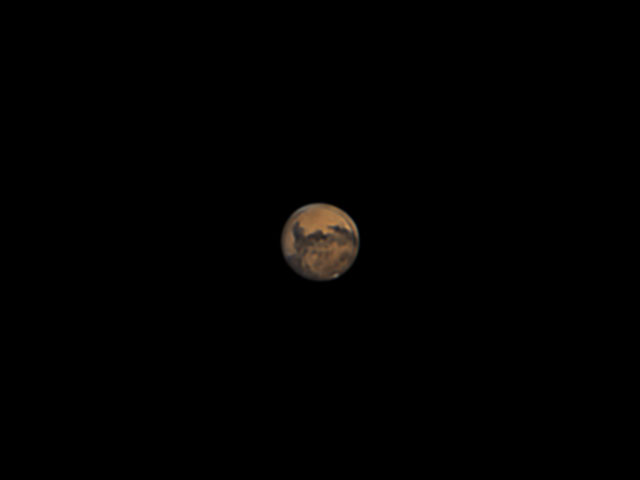
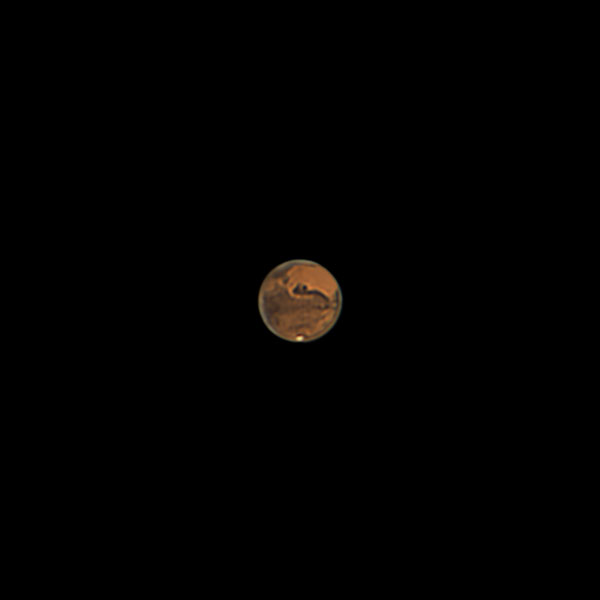
The fact that we could image the surface details of a planet which is millions of kilometres away from us, is still indigestible. In the above 2 images, you can spot a white dot on the southern side; that’s polar ice cap on the planet. The challenges faced in capturing this are that the planet is smaller in size and so is my telescope; plus, the planet approaches close to earth every 2 years. Mars opposition happens every two years as Earth’s orbit catches up to Mars’s orbit, and Sun, Earth and Mars aligns in the straight line. Once the close approach of Mars is done, we have to wait for 2 years to get a closer look because Earth’s orbit is smaller than Mars’s.
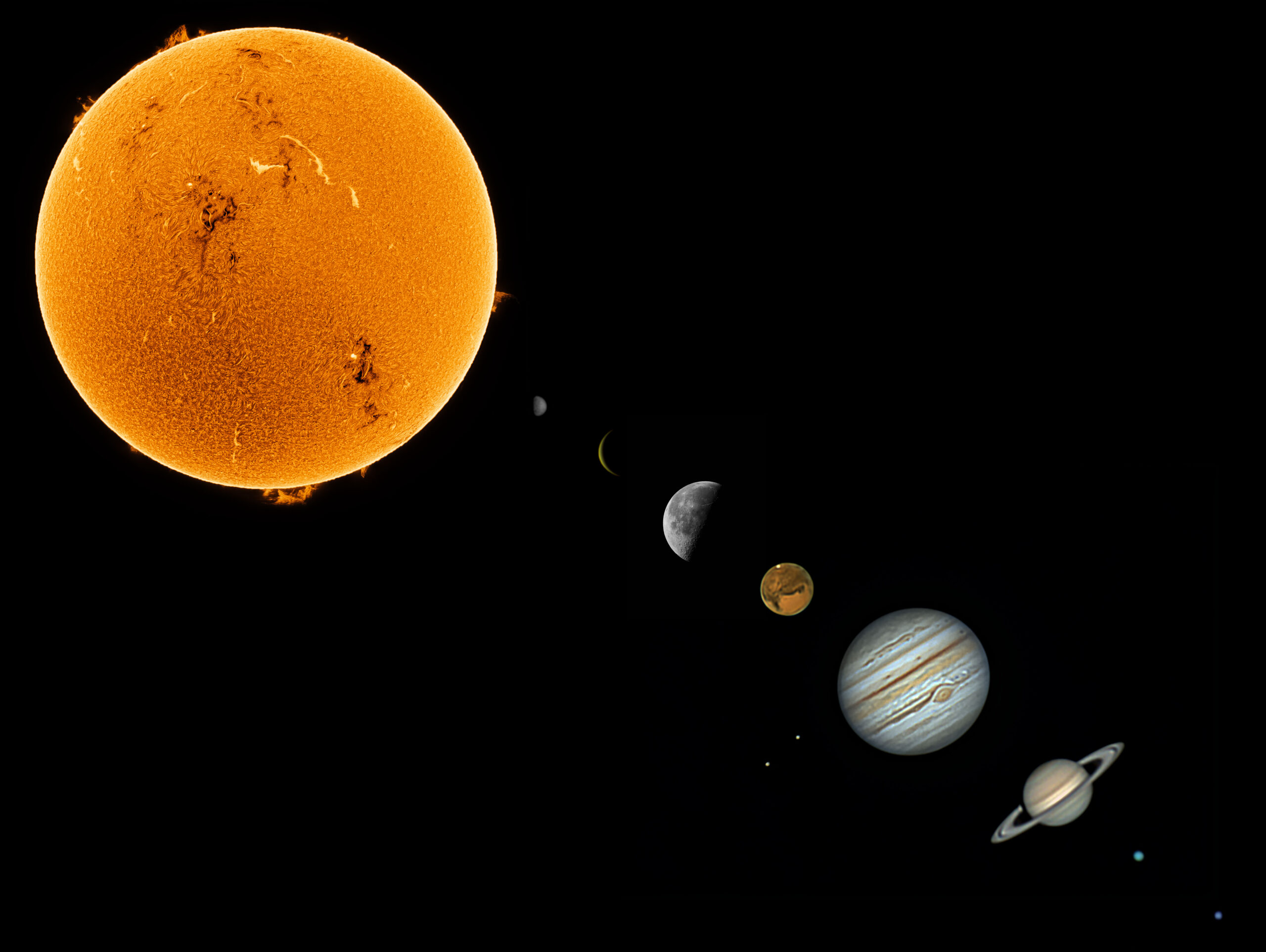
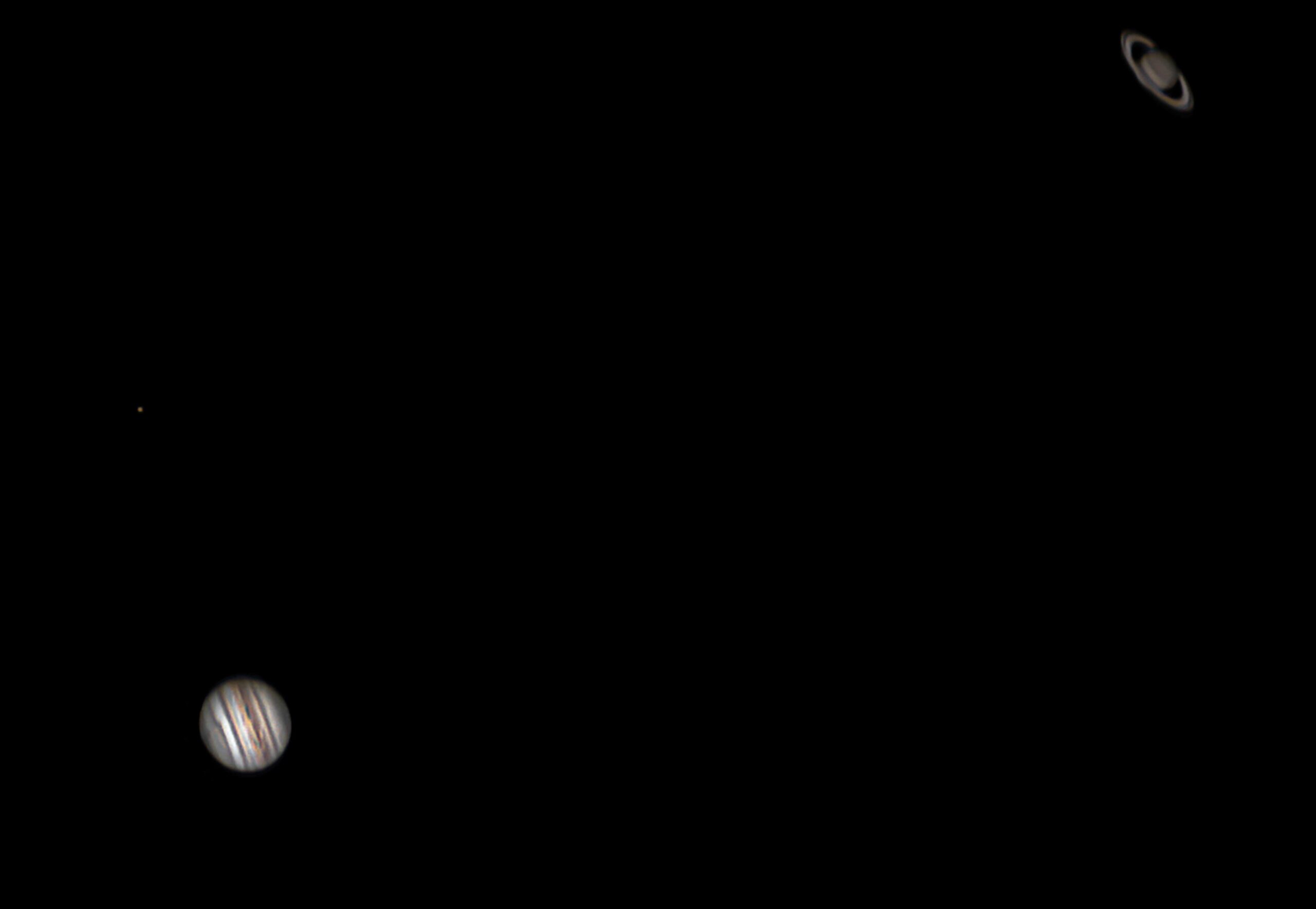
One Cosmic family